
The Press Page

Quote from Alpine Underground on June 27, 2026, 5:32 pmBuilding your own skis or snowboard is an incredibly rewarding rabbit hole to jump down. At the heart of the entire process is the press—the machine that bonds the base, edges, fiberglass, core, and topsheet together under high pressure and heat using epoxy.
How you build that press changes dramatically depending on whether you are working out of a garage or running a mass-production factory.
1. Home Builders: DIY & Resourceful Pressing
Home builders need presses that are cost-effective, space-efficient, and capable of applying even pressure without requiring industrial-grade infrastructure.The two most common DIY methods are Pneumatic (Air Bladder) Presses and Vacuum Presses.
A. Pneumatic Air Bladder Press (The Gold Standard for DIY)
This is the most popular style for serious hobbyists. It uses a rigid, heavy-duty frame (often built from massive steel I-beams or heavy wood timbers) to constrain an inflatable air bladder (like a fire hose).How it works: The ski/snowboard sandwich is placed between two shaped wooden molds (catamounts). The air bladder is placed on top. When inflated to roughly 30 to 50 PSI, it exerts massive, perfectly uniform downward force across the entire variable profile of the board.
Pros: Mimics factory-level pressure; excellent epoxy wet-out and bond strength.
Cons: Requires welding skills or heavy carpentry to build a frame that won't catastrophically explode under thousands of pounds of total force.
B. Vacuum Bagging Press
The easiest entry point for a beginner. Instead of fighting high positive pressure, you use atmospheric negative pressure.How it works: You place the laminate stack onto a single bottom mold, slide the whole thing into a heavy-duty plastic bag (or seal it under a silicone membrane), and use a vacuum pump to suck all the air out.
Pros: Incredibly cheap, safer than high-pressure pneumatic systems, and takes up minimal space.
Cons: Strictly limited to a maximum of 14.7 PSI (one atmosphere) of pressure. This means you have to be much more meticulous with your epoxy work to avoid dry spots or air bubbles, and you won't get the same tight compaction as a pneumatic press.
Building your own skis or snowboard is an incredibly rewarding rabbit hole to jump down. At the heart of the entire process is the press—the machine that bonds the base, edges, fiberglass, core, and topsheet together under high pressure and heat using epoxy.
How you build that press changes dramatically depending on whether you are working out of a garage or running a mass-production factory.
1. Home Builders: DIY & Resourceful Pressing
Home builders need presses that are cost-effective, space-efficient, and capable of applying even pressure without requiring industrial-grade infrastructure.
The two most common DIY methods are Pneumatic (Air Bladder) Presses and Vacuum Presses.
A. Pneumatic Air Bladder Press (The Gold Standard for DIY)
This is the most popular style for serious hobbyists. It uses a rigid, heavy-duty frame (often built from massive steel I-beams or heavy wood timbers) to constrain an inflatable air bladder (like a fire hose).
How it works: The ski/snowboard sandwich is placed between two shaped wooden molds (catamounts). The air bladder is placed on top. When inflated to roughly 30 to 50 PSI, it exerts massive, perfectly uniform downward force across the entire variable profile of the board.
Pros: Mimics factory-level pressure; excellent epoxy wet-out and bond strength.
Cons: Requires welding skills or heavy carpentry to build a frame that won't catastrophically explode under thousands of pounds of total force.
B. Vacuum Bagging Press
The easiest entry point for a beginner. Instead of fighting high positive pressure, you use atmospheric negative pressure.
How it works: You place the laminate stack onto a single bottom mold, slide the whole thing into a heavy-duty plastic bag (or seal it under a silicone membrane), and use a vacuum pump to suck all the air out.
Pros: Incredibly cheap, safer than high-pressure pneumatic systems, and takes up minimal space.
Cons: Strictly limited to a maximum of 14.7 PSI (one atmosphere) of pressure. This means you have to be much more meticulous with your epoxy work to avoid dry spots or air bubbles, and you won't get the same tight compaction as a pneumatic press.

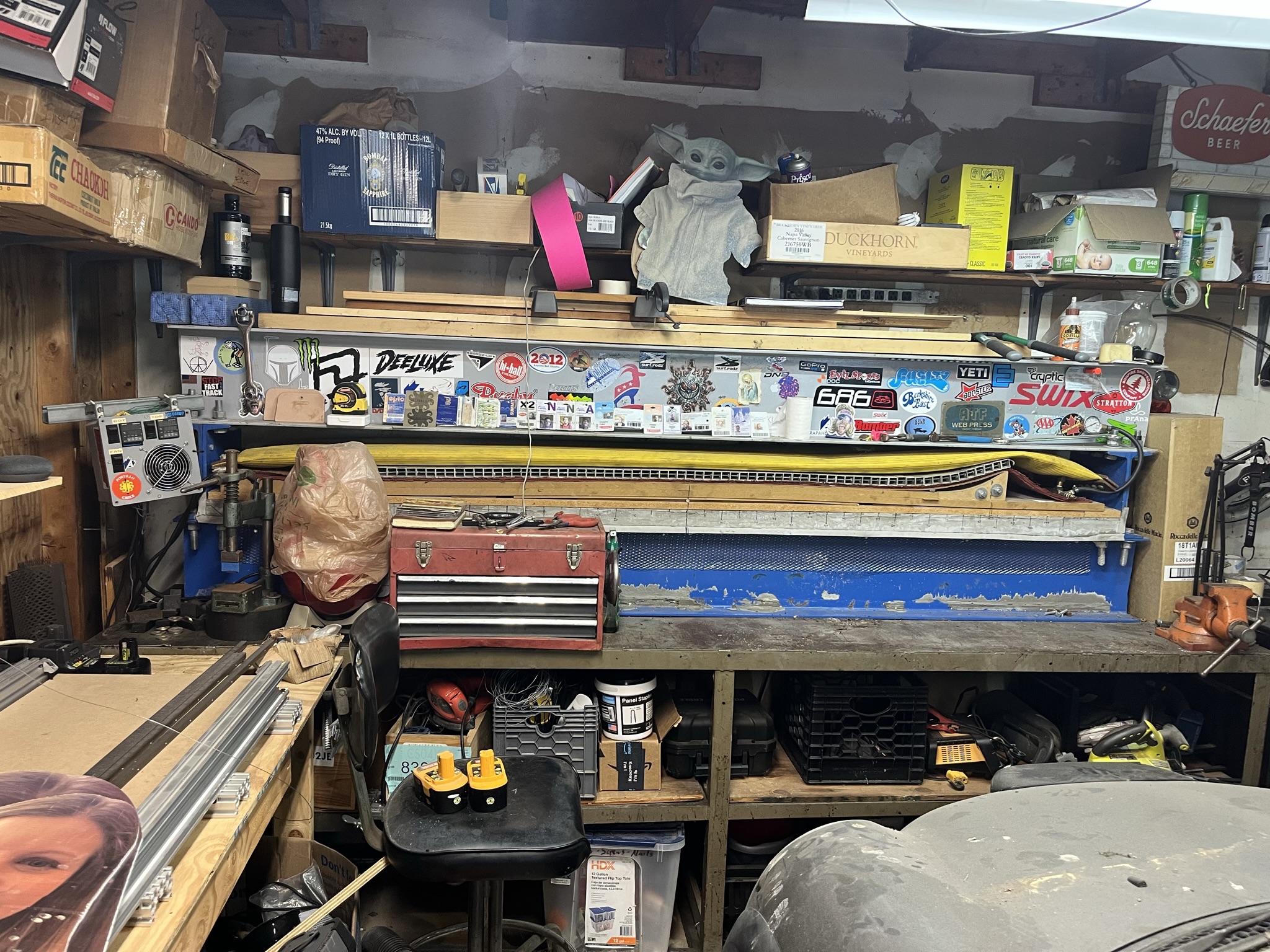
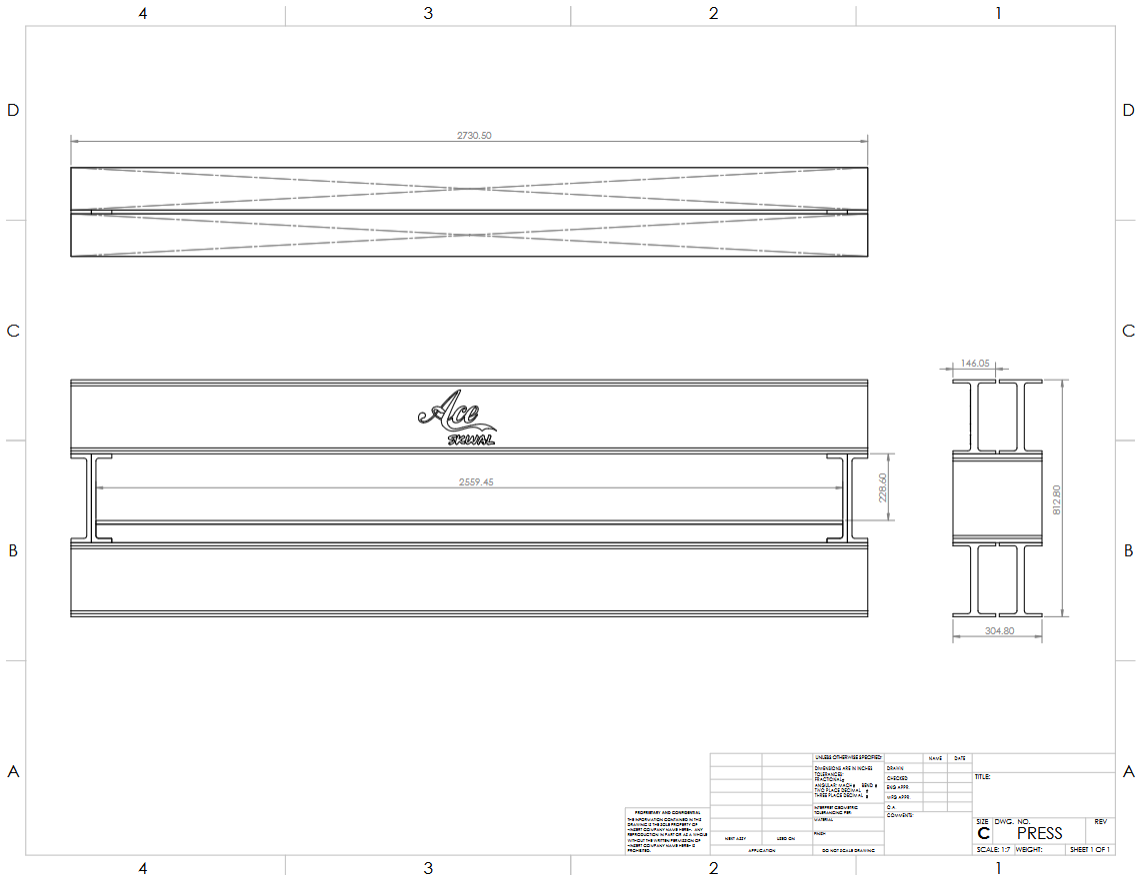
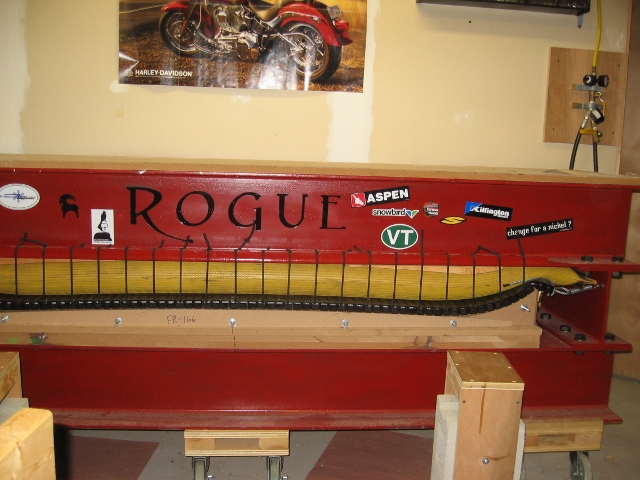
Quote from Ace Skwal on July 2, 2026, 5:26 pmI built this press back in 2010 out of scrap steel. In this picture I have it set up in my garage at home but I am currently I am in the process of moving it to a new location.
I built this press back in 2010 out of scrap steel. In this picture I have it set up in my garage at home but I am currently I am in the process of moving it to a new location.
Quote from Alpine Underground on July 21, 2026, 9:13 pmVarious pneumatic press setups
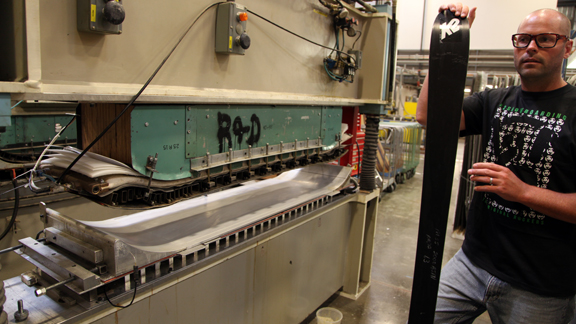
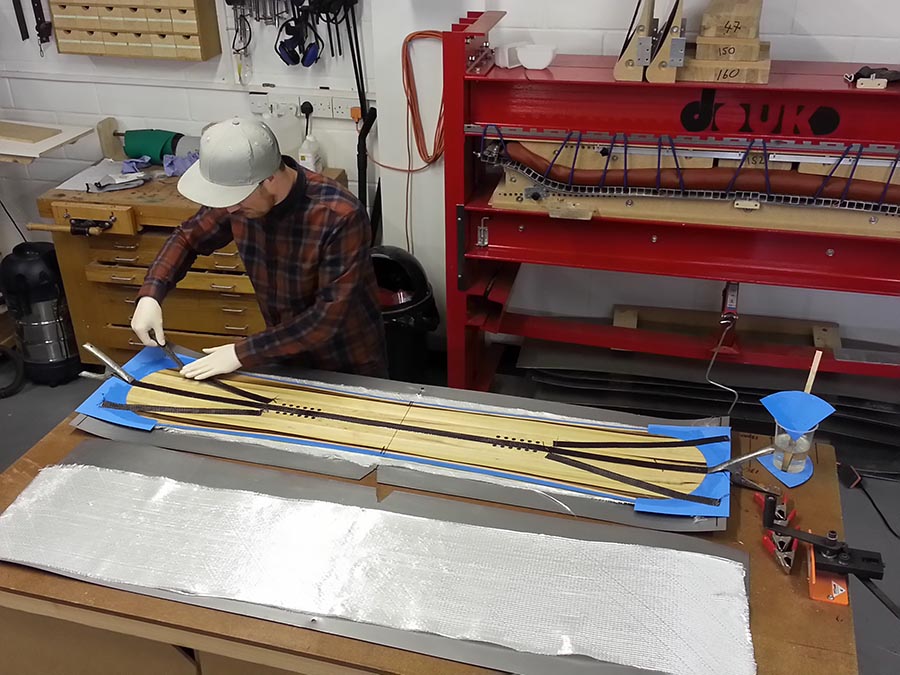
Various pneumatic press setups
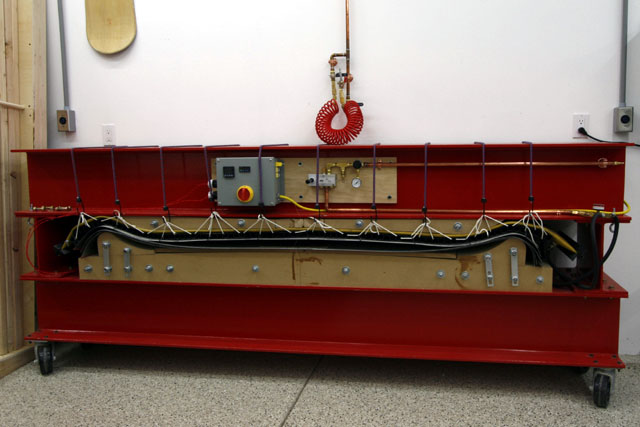
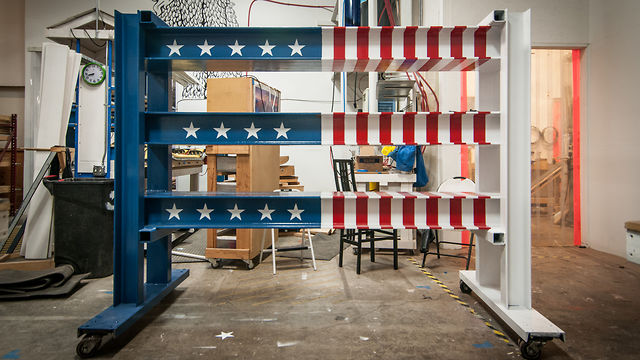
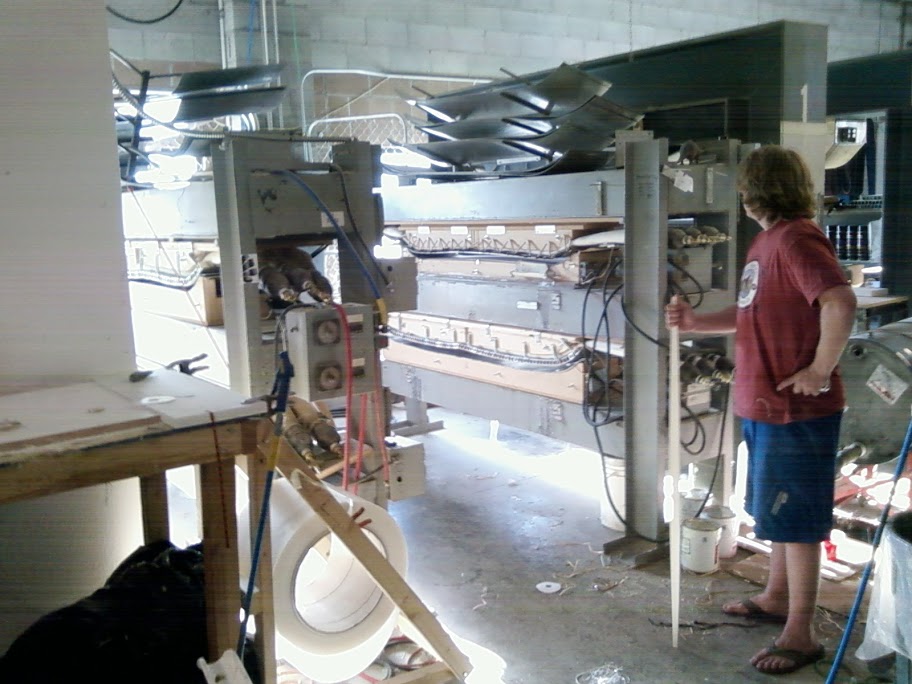
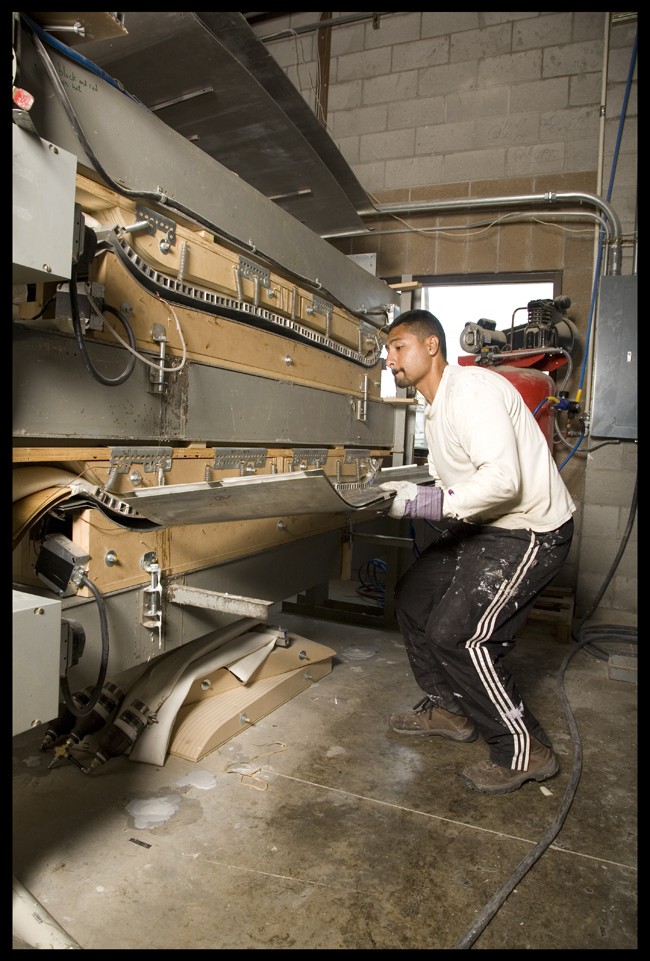
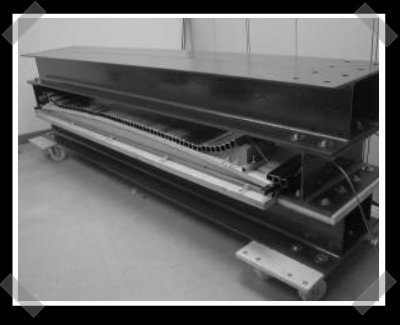
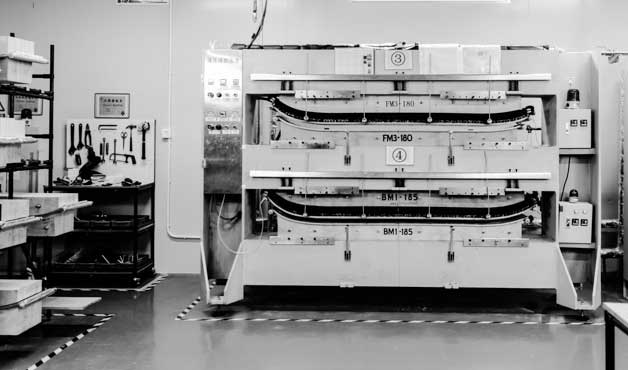
Quote from Alpine Underground on August 22, 2026, 11:02 pmVarious pneumatic press setups
Various pneumatic press setups


Quote from Alpine Underground on August 22, 2026, 11:04 pmAutoclave Press setup
Autoclave Press setup


